Countertop Overlay in Boise: Can New Tops Go Over Old Ones?
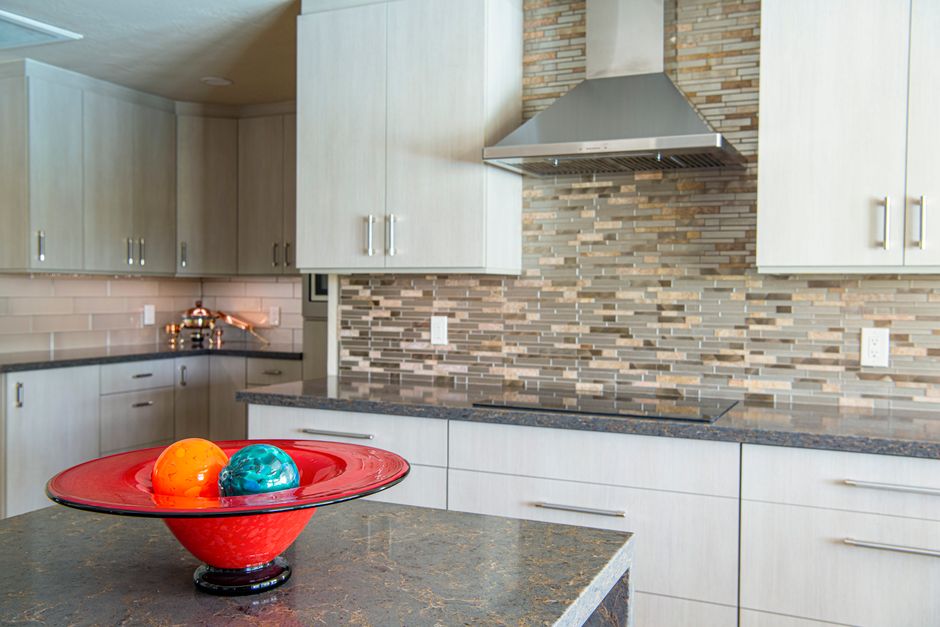
New countertops can be installed over existing ones, but only when the old top is flat, solid, dry, and firmly attached, and when the added height does not disturb the sink, faucet, dishwasher, range, or anything on the wall above. An overlay hides what lies beneath it. It does not repair it. For a Boise homeowner, the real question is less "can it be done" and more "does this particular kitchen pass the checks."
Start With the Condition of the Old Top
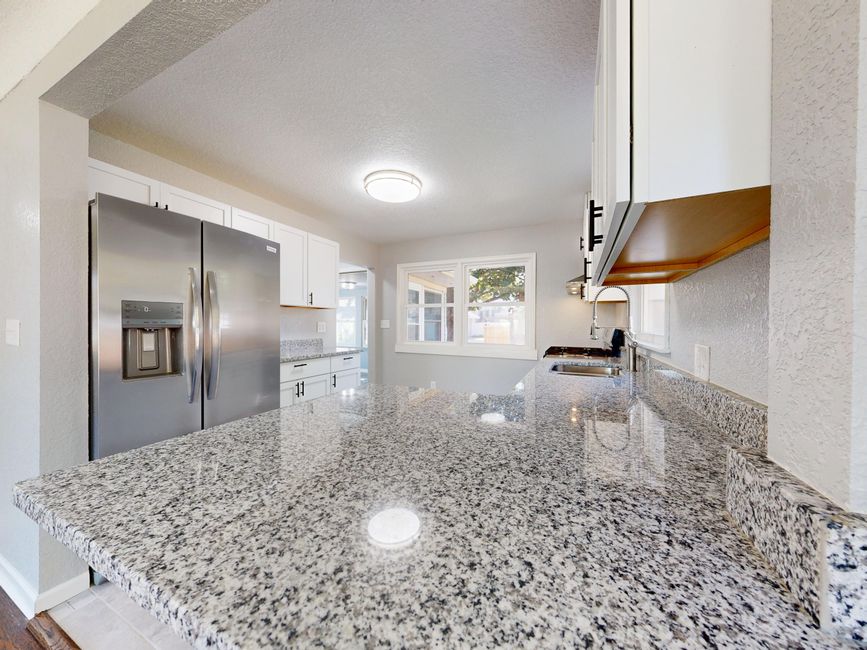
The existing countertop becomes the foundation for the new one, so its condition decides everything else.
Check flatness with a straightedge
Lay a 4 foot straightedge across the top in several directions: along the length, across the depth, and diagonally. Look for gaps, humps, or dips. Rigid materials such as stone can crack when they rest on uneven support, so any variation needs to be corrected by the installer or the old top should come out.
Look from below with a flashlight
Open the sink base and nearby cabinets and shine a light up at the underside of the deck. Dark stains, swollen particleboard, soft spots, or mold usually point to a past or ongoing leak. In that case the leak has to be found and at least the damaged section removed. A new surface laid over wet substrate only hides the problem while it keeps growing.
Press on laminate and check its edges
Laminate that has lifting edges, bubbles, or a spongy feel suggests a failed bond or a wet core. Adhesive cannot hold a new top securely to a surface that is already letting go.
Which Existing Tops Are Easiest to Cover
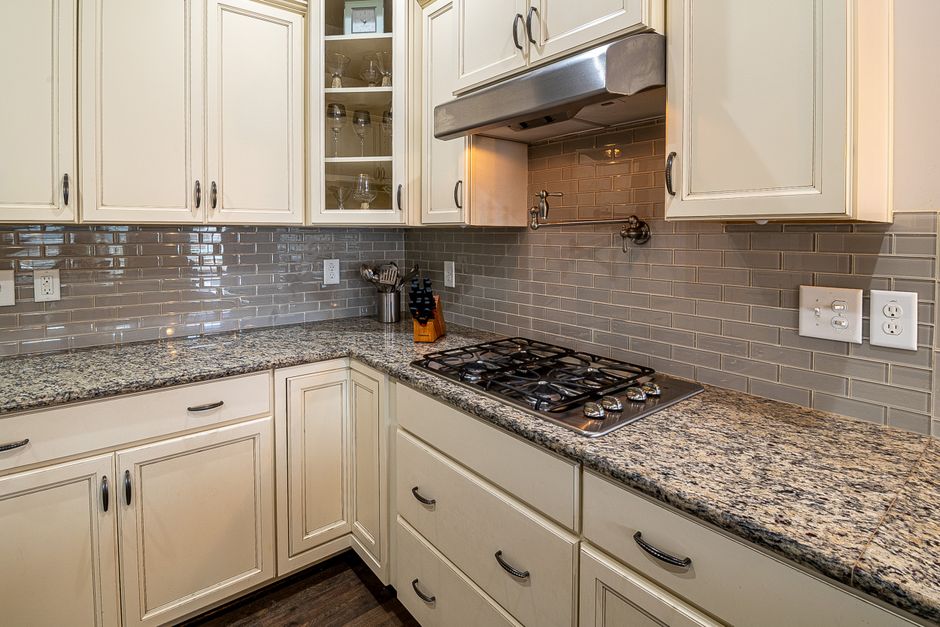
Flat laminate and solid surface tops, including products such as Corian and Avonite, are often the simplest to cover because they present a smooth, continuous face. Profile matters as much as material. A molded backsplash or a raised front edge usually has to be cut away or removed, because the new top cannot sit flat over it.
Tile is trickier. It can be overlaid only if it is tightly bonded and the surface can be made flat. Cracked or loose tile, failing grout, and uneven grout lines all weaken support. Tile also tends to raise the finished height more than people expect.
Add Up the Height Before Ordering
Every layer counts: the old top, the adhesive or setting layer, and the new material. Thin overlay products are commonly about 1/4 to 3/4 inch thick, while a 3 cm stone slab adds about 1 1/4 inches. Use the real thickness of the chosen product plus the adhesive layer, then compare the finished height with the usual counter height of about 36 inches.
A small increase can ripple upward. Measure to window sills, backsplash tile, outlets, switches, and upper cabinets. An extra inch can bury a tile course, crowd an outlet cover, or leave an awkward gap at the old backsplash line.
Weight and Cabinet Support
Stone and engineered stone, including brands such as Cambria, are heavy. A full 3 cm slab can add roughly 18 to 20 pounds per square foot on top of the weight already there. Before committing, check the kitchen cabinet boxes for racking, look for sagging spans, test the particleboard for weakness, and confirm the cabinets are secured to the wall.
Level the run first
Older Boise homes, including some in the North End, may have settled floors and wavy plaster walls. Those conditions can leave a cabinet run out of level or create uneven wall gaps. Check level before templating, and shim or correct the base so the new top is not forced to follow an old problem.
Overhangs still need support
A thicker top does not make an overhang self supporting. A kitchen island with seating, or any extended overhang, needs brackets or other support suited to the material and the depth of the overhang.
Sink Fit Changes With the Sink Type
Drop in sinks
The new top may bury or interfere with the old rim, so the sink often has to come out. Check that its mounting clips can grip the combined deck thickness, or plan to replace them.
Undermount sinks
The cutout in the old and new layers has to line up cleanly, with a solid way to support the sink and a watertight seal. If the old top is hiding corrosion or leaks around the sink, that is a reason to remove it rather than cover it.
Farmhouse sinks
Their exposed front and the way they sit against the deck leave little room for an added layer. The sink or cabinet may need rework, which can make full removal the more practical route.
Faucet and Deck Hardware
Compare the combined deck thickness with the faucet's maximum mounting thickness before anything is ordered. Soap dispensers, filter faucets, air switches, and other deck mounted parts may need longer hardware or outright replacement.
Appliance Clearances
Dishwasher
Added height can leave the top mounting brackets short of their original attachment point. Check whether the dishwasher can be secured at its sides or by another method approved by its manufacturer, and make sure it can still be pulled out for service.
Range
A slide in range may need to be raised to sit properly against the new surface, but its leveling legs have limited travel. Confirm the range stays stable, and read the manual for the minimum clearance to any hood or microwave above.
Cooktop
A drop in cooktop needs the correct cutout and enough room for its clips and connections. The appliance manual may limit counter thickness or specify clearances, so the old cutout should not be trusted as is.
Boise Conditions Worth Planning Around
Hard water
Much of the Boise area has hard water, which leaves scale around faucets and sink joints. Seal exposed edges and sink joints well, keep them clean, and inspect for failed sealant. Water that gets in at these points can stay hidden between layers.
Dry winters and butcher block
Boise's dry winters and seasonal humidity swings make butcher block shrink and expand. Do not glue it rigidly over an old top. Finish all sides and use fasteners that allow the wood to move.
Winter installation
Adhesives and materials kept in a cold garage or truck may not perform as intended. Follow the manufacturer's temperature and acclimation instructions, and keep the kitchen within the specified range while the adhesive cures.
Safety Before Anyone Cuts Anything
Cutting, grinding, or polishing engineered stone can release respirable crystalline silica, the form of silicon dioxide linked to silicosis. Natural stone can contain silica too. Leave on site modifications to a qualified crew that uses wet methods or dust collection and proper respiratory protection. Cutting outside does not make the dust harmless.
In older homes, some adhesives, backing materials, and nearby finishes may contain asbestos, and older paint may contain lead. If the top, backsplash, or surrounding materials may be original, or their age is unknown, test before cutting or removing anything.
Signs the Old Top Should Come Off
Removal is the better call when any of these show up:
- Dark stains, swollen particleboard, soft spots, or mold under the sink or along the deck
- Laminate that lifts, bubbles, or feels spongy
- Loose or cracked tile, or grout that is crumbling
- A surface that cannot be made flat
- Corrosion or leaks around the sink
- Cabinets that are racked, sagging, or not secured to the wall
- A farmhouse sink or a tight appliance fit with no room for added thickness
- Unknown materials in an older home that have not been tested
An overlay is not automatically cheaper, faster, or better than removal. In some kitchens it is a reasonable choice, and in others it only postpones a bigger repair.
Get the Method Confirmed in Writing
Ask both the material manufacturer and the installer whether the warranty covers the specific old surface, adhesive, and support in the kitchen. Have the installer list any repairs required first, and who will handle the sink, faucet, and appliance changes. Written confirmation settles those questions before the new top goes on rather than after.